One of the key goals in the modern rehabilitation of children with cerebral palsy is to prevent secondary musculoskeletal deformities and to create the conditions in which a child can develop movement skills that are as natural and physiological as possible.
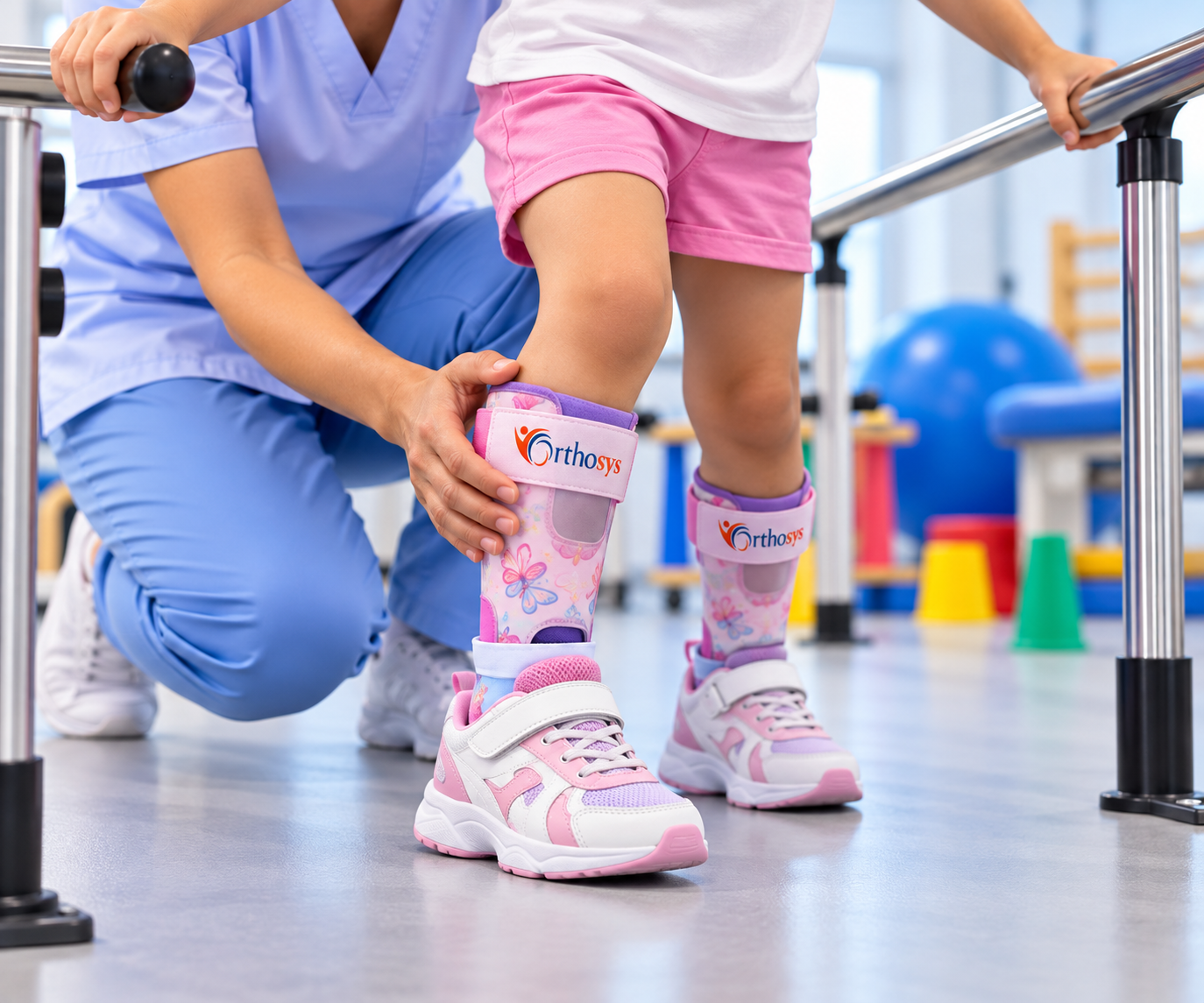
To this end, Medicom uses the international DAFO (Dynamic Ankle Foot Orthosis) concept — a modern system of dynamic foot and ankle orthotic management grounded in the principles of neurophysiology, biomechanics and individually tailored orthotic care.
Unlike conventional orthoses, DAFO does far more than hold the joints in place mechanically. The concept is designed to improve sensorimotor control, optimise lower-limb biomechanics, enhance postural stability and help the child establish a natural, physiological movement pattern.
Every orthosis is custom-made using modern digital technology and shaped precisely to the child's individual anatomy.
What Is DAFO?
DAFO (Dynamic Ankle Foot Orthosis) is a custom-made dynamic orthosis for the foot and ankle. It is built on the Total Contact Orthosis principle, which ensures full anatomical contact with both the plantar and dorsal surfaces of the foot.
At the heart of the DAFO concept is an orthosis designed around the anatomical structure of the foot, the biomechanics of the ankle complex, the ligaments that support it and the child's own specific motor impairments.
Full anatomical contact spreads pressure evenly across the whole foot, strengthens proprioceptive stimulation, improves sensory feedback and supports the development of more natural motor control.
Unlike rigid orthoses of traditional design, DAFO preserves the necessary range of natural movement while keeping the foot stable and the joints correctly aligned.
Who Is DAFO Recommended For?
The DAFO concept is used for children with the following conditions:
- Cerebral palsy
- Spastic movement disorders
- Hypotonic syndromes
- Gait disorders
- Ankle instability
- Equinus foot posture
- Valgus foot deformity
- Balance problems
- Delayed development of motor skills
- Other neurological conditions that affect motor function
How Does Treatment Work?
-
Free Initial Consultation
Medicom specialists carry out a comprehensive assessment of the child, evaluating muscle tone, range of motion, the condition of the joints, gait characteristics and level of motor development.
-
Biomechanical Analysis
The assessment looks at:
- Foot position
- Lower-limb alignment
- Ankle stability
- How load is distributed
- Gait pattern
- The child's functional abilities
-
3D Foot Scanning
The orthosis is made using modern three-dimensional scanning technology, which produces a highly accurate digital model of the foot without the need for plaster casts.
-
Custom Digital Modelling
When designing the orthosis, we take into account:
- Diagnosis
- The child's age
- Muscle tone
- Severity of motor impairment
- Gait characteristics
- Rehabilitation goals
-
Fabrication and Custom Fitting
Once the orthosis is made, our specialists fit it on the child and check its fit, stability, comfort and functional effectiveness.
Individual adjustments are made where needed.
-
Ongoing Monitoring and Support
As the child grows, the orthosis needs to be reviewed regularly and adjusted where necessary.
Medicom specialists carry out follow-up appointments, assess how well the orthotic treatment is working and adjust the treatment programme accordingly.
Technologies We Use
Our DAFO orthoses are made using:
- Three-dimensional scanning
- CAD/CAM modelling
- Digital orthosis design
- Modern thermoplastic materials
- Custom fabrication techniques
- International orthotic standards
Benefits of the DAFO Concept
- DAFO helps to:
- improve postural stability;
- enhance the quality of walking;
- establish a natural, physiological movement pattern;
- sharpen proprioceptive awareness;
- reduce abnormal movement patterns;
- prevent secondary deformities of the feet and lower limbs;
- increase the child's functional independence.
Why Choose Medicom?
- Over 20 years of professional experience
- Every orthosis made individually
- Advanced 3D scanning technology
- CAD/CAM modelling
- International orthotic standards
- Free initial consultation
- Regular ongoing monitoring
- Comprehensive support for the child throughout rehabilitation
Duration of Treatment
How long a child wears DAFOs is decided individually and depends on their age, clinical diagnosis, rate of growth and rehabilitation goals.
Regular check-ups mean the orthosis can be adjusted in good time, so it stays as effective as possible.
Frequently Asked Questions
How is DAFO different from a standard orthosis?
Rather than simply holding the joint in place mechanically, as conventional orthoses do, DAFO provides full anatomical contact with the foot, improves sensory feedback and helps the child develop a more natural movement pattern.
Can DAFO be used in severe forms of cerebral palsy?
Yes. Whether it is suitable is decided individually, following a comprehensive assessment of the child and an evaluation of their functional status.
How quickly do children get used to the orthosis?
Most children adapt to DAFO within a few days. The wearing schedule is set by the treating specialist and built up gradually.
Can DAFO be combined with rehabilitation?
Yes. The best results come from combining orthotic treatment with physiotherapy, therapeutic exercise, occupational therapy and other forms of comprehensive rehabilitation.
How is the cost of the orthosis determined?
The cost is calculated individually and depends on the design of the orthosis, the child's clinical needs and the materials used.
At Medicom, the initial consultation, clinical assessment and development of an individual orthotic plan are free of charge.