At Medicom, every upper limb prosthesis is designed for the individual, taking into account the level of amputation, the anatomy of the residual limb, and the patient's age, occupation, lifestyle, functional needs and personal expectations.
We see prosthetic care as a complete process: high-tech fabrication of the device, training in its use, functional adaptation and long-term follow-up support.
Who Is Upper Limb Prosthetics Recommended For?
Upper limb prosthetics is recommended for patients with the following conditions:
- Amputation of one or more fingers
- Partial hand amputation
- Amputation at wrist level
- Forearm (transradial) amputation
- Upper arm (transhumeral) amputation
- Shoulder disarticulation
- Congenital upper limb anomalies
- Traumatic amputations
- Amputations due to cancer or other medical reasons
How Does the Prosthetic Process Work?
Free Initial Consultation
We begin with a thorough clinical assessment. Medicom specialists evaluate the amputation level, the condition of the residual limb, muscle activity, range of motion in the remaining joints and functional abilities, and define the goals for your future prosthesis.
Measurements and 3D Scanning
To achieve maximum precision, we use advanced 3D scanning technology to obtain a highly accurate digital model of the residual limb.
Digital technology ensures the socket matches the anatomy as precisely as possible, increasing comfort and improving the function of the finished prosthesis.
Custom Prosthesis Design
Every prosthesis is designed for the individual.
When choosing the design, we take into account:
- Amputation level
- The patient's age
- Lifestyle
- Occupation
- Physical activity level
- Required functional capabilities
- The patient's aesthetic preferences
Based on this comprehensive assessment, our specialists select the most effective combination of components and technologies to achieve the best possible functional outcome.
Fitting and Functional Adjustment
Once the prosthesis has been made, the first fitting takes place.
At this stage, our specialists:
- Check the socket fit
- Assess how easy the prosthesis is to use
- Adjust the mechanical or electronic components
- Program the myoelectric system (if required)
- Fine-tune the design as a whole
Learning to Use the Prosthesis
Mastering the prosthesis is a crucial stage of rehabilitation.
Patients learn how to:
- Put on and take off the prosthesis correctly
- Control mechanical or myoelectric systems
- Carry out everyday tasks
- Use different types of grip
- Use the device safely
Patients fitted with bionic prostheses also learn to control the hand's various operating modes.
Long-Term Technical Support
Medicom specialists continue to support each patient after the fitting is complete.
We provide:
- Free servicing
- Technical adjustments to the device
- Preventive check-ups
- Software updates for electronic systems (if required)
- Expert advice throughout the service life of the prosthesis
Technologies We Use
Medicom uses world-leading technology in upper limb prosthetics.
Our main technology partners are:
- Ottobock (Germany)
- Motorica (Russia)
- Össur (Iceland)
- Taska (New Zealand)
In our work, we use:
- Digital 3D scanning
- CAD/CAM technology
- Digital socket modelling
- Myoelectric control systems
- Bionic prosthetic technology
- Multi-grip bionic hands
- Custom silicone finger and hand prostheses
- Modern lightweight composite materials
Types of Prostheses We Make
Cosmetic Prostheses
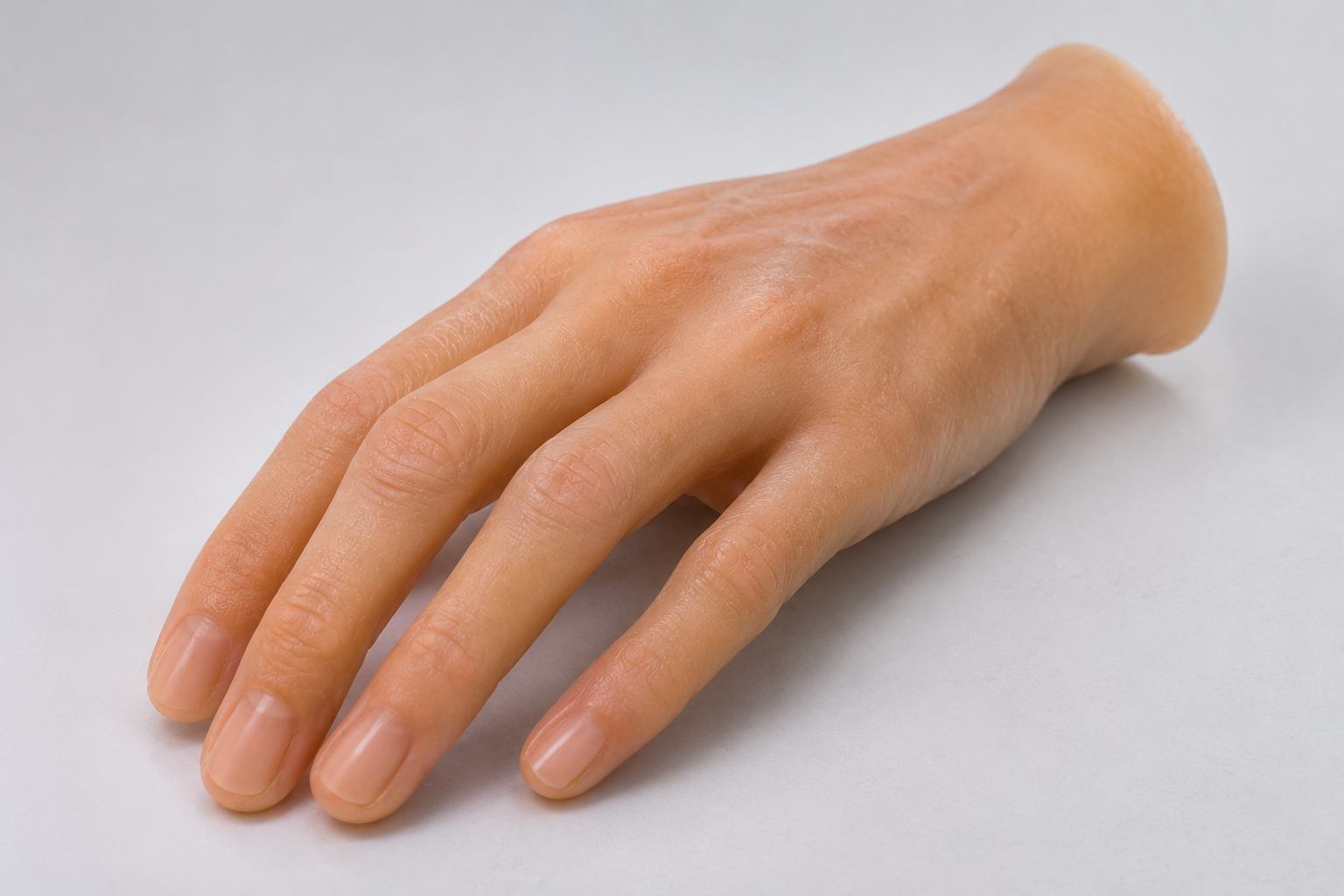
Cosmetic prostheses are designed to restore the appearance of the missing limb as naturally as possible.
Each one is custom-made to match the patient's skin tone, shape, size and anatomy. Modern silicone materials achieve a highly natural and aesthetically pleasing result.
These prostheses help patients feel more at ease and more self-confident, and support their social adaptation.
Functional Mechanical Prostheses
Mechanical prostheses are designed for everyday household tasks.
Reliable, durable and easy to use, they allow patients to perform various types of grip, hold objects and use the prosthesis effectively in daily life.
Myoelectric Prostheses
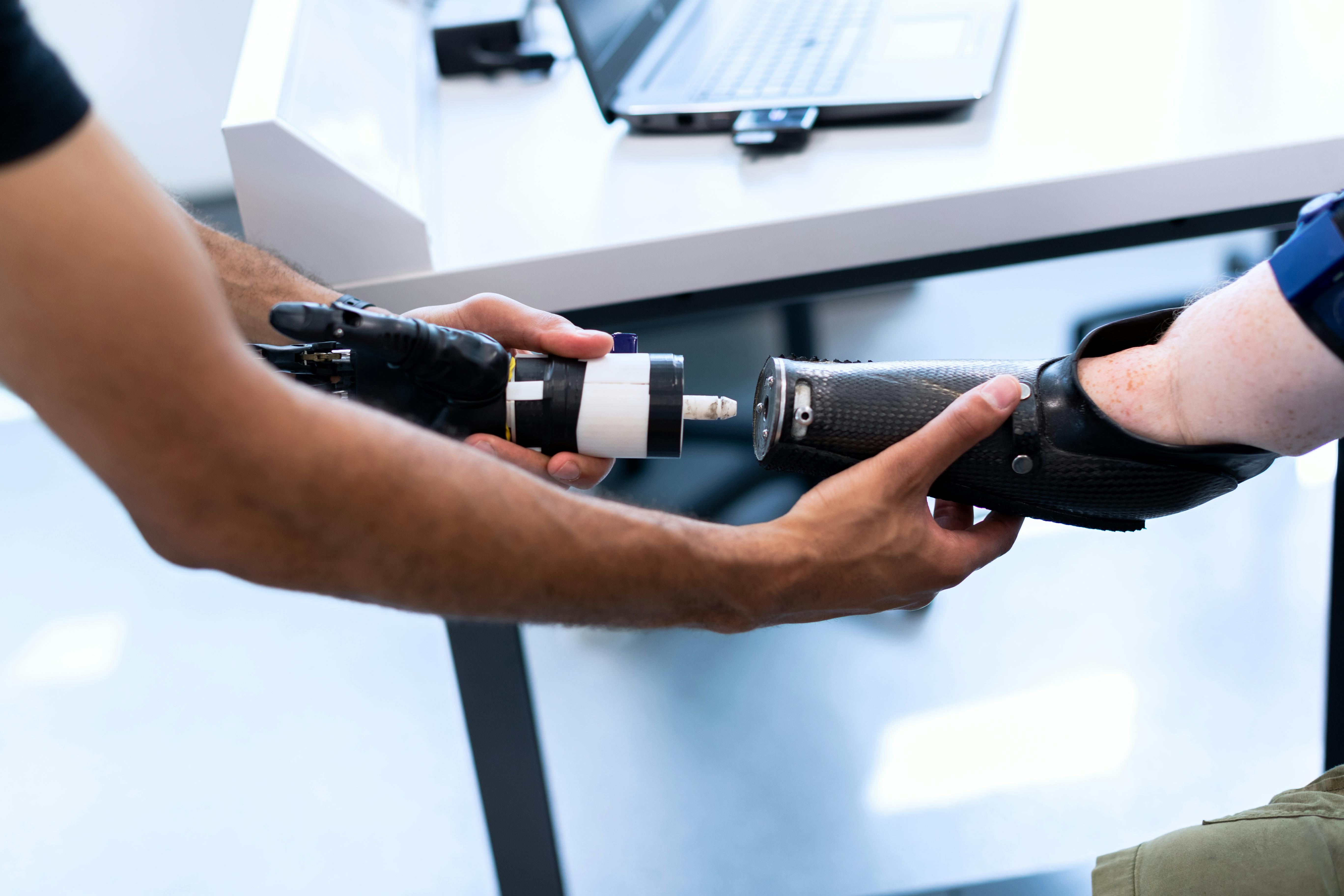
Myoelectric prostheses are controlled by the electrical signals generated when the muscles of the residual limb contract.
Highly sensitive sensors detect this muscle activity and convert it into movements of the hand or of individual functional parts of the prosthesis.
These systems offer intuitive control and precise movement, and greatly expand what the user is able to do.
Bionic Prostheses
Bionic prostheses represent the cutting edge of upper limb prosthetics.
Intelligent electronic systems enable a variety of grip types, adapt to the task in hand and bring the movements of the artificial hand as close as possible to the natural biomechanics of the human hand.
Modern bionic systems offer a wide range of functional modes, significantly increasing the patient's independence and quality of life.
Finger Prostheses
Custom finger prostheses are used when one or more fingers have been lost.
Depending on the clinical situation, they may serve an aesthetic purpose or combine a natural appearance with partial restoration of hand function.
Prostheses for Children
Fitting children with prostheses calls for a special approach that takes into account the anatomy of a growing body and the stages of the child's psychomotor development.
Each children's prosthesis is designed individually around the child's age, activity level, rate of growth and functional goals, supporting the healthy development of motor skills and successful social adaptation.
Why Choose Medicom?
- Over 20 years of professional experience
- Every device individually made
- World-leading technology
- Advanced digital 3D technology
- Myoelectric and bionic prostheses
- Free initial consultation
- Outreach consultations for patients in remote regions
- Free long-term technical support
- A comprehensive training and functional adaptation programme
Production Time
A prosthesis usually takes 3 to 8 weeks to make, depending on the amputation level, the chosen technology and the complexity of the design.
Frequently Asked Questions
Can hand function be restored after an amputation?
Modern prosthetic technology can restore upper limb function to a significant degree. How much function is regained depends on the amputation level, the type of prosthesis chosen and the patient's individual characteristics.
What is the difference between a myoelectric and a bionic prosthesis?
A myoelectric prosthesis is controlled by electrical signals from the muscles of the residual limb. Bionic systems are a more advanced solution, offering extended functionality, multiple grip modes and intelligent movement control.
Can you make a prosthesis for a child?
Yes. Medicom makes custom upper limb prostheses for children, tailored to each child's age, stage of growth and functional needs.
Do you offer servicing after the prosthesis is fitted?
Yes. All patients receive free technical support, servicing and expert advice for the entire service life of the device.
What if I live far from the centre?
Medicom specialists regularly hold outreach consultations and initial assessments in different regions, so you can begin the prosthetic process without having to make repeated trips.
How is the cost of a prosthesis determined?
The cost is calculated individually and depends on the amputation level, the chosen technology, the type of components, the functional requirements and the technical complexity of the design.
That is why the initial consultation, comprehensive assessment and selection of the best solution at Medicom are all free of charge.